
Why Light Is the Most Important Material in Any Room
There is a moment, just after seven in the morning, when the light in my father's kitchen in Italy turns the color of clarified butter. It moves low across the table, catches the steam off the coffee pot, and finds the flour still dusted on the counter from the night before. No one else is awake. The house is quiet enough that the light itself feels like the only thing moving.
I did not have language for what that light was doing to me then. I only knew that I wanted to be inside it, every morning, for as long as it lasted. Decades later, working as a designer, I still chase that exact hour and that exact quality of light in every room I touch. It turns out I was right to.
The Science Caught Up With What I Already Knew

Office designed by Flocdesign
Natural light exposure in the morning does something measurable to the human body. It triggers the production of serotonin, the neurotransmitter tied to mood, focus, and a sense of calm, and it resets the body's internal clock — the circadian rhythm — that governs when we wake, when we feel alert, and when we are ready to sleep. Morning daylight is one of the strongest environmental cues we have for regulating that rhythm; it tells the brain when the day has begun, which in turn determines how well the body winds down twelve hours later.
This is not a wellness trend. It is basic human biology, and it has been part of how we are built for as long as we have existed. What has changed is that most of us now spend our mornings under artificial light, behind curtains, in rooms that were never designed to let that first light in. We have, in a sense, designed the most important material out of our homes.
Because that is what natural light is: a material. Not a finishing touch, not an afterthought once the paint and the furniture and the fabric have been chosen — a material, in the same category as stone, wood, linen, and plaster. It has weight, it has texture, it changes throughout the day, and unlike almost everything else in a room, it is free. And yet it is treated, again and again, as an afterthought.
Why I Ask About Light Before I Ask About Anything Else
When I take on a room, the first question I ask is never about color, or layout, or furniture. It is: where does the light come from, and when? Which direction does the room face. What time does the sun reach the far wall. Is there a tree, a building, an awning between the window and the sky that will filter or block it. What does this room look like at seven in the morning, at noon, at six in the evening.
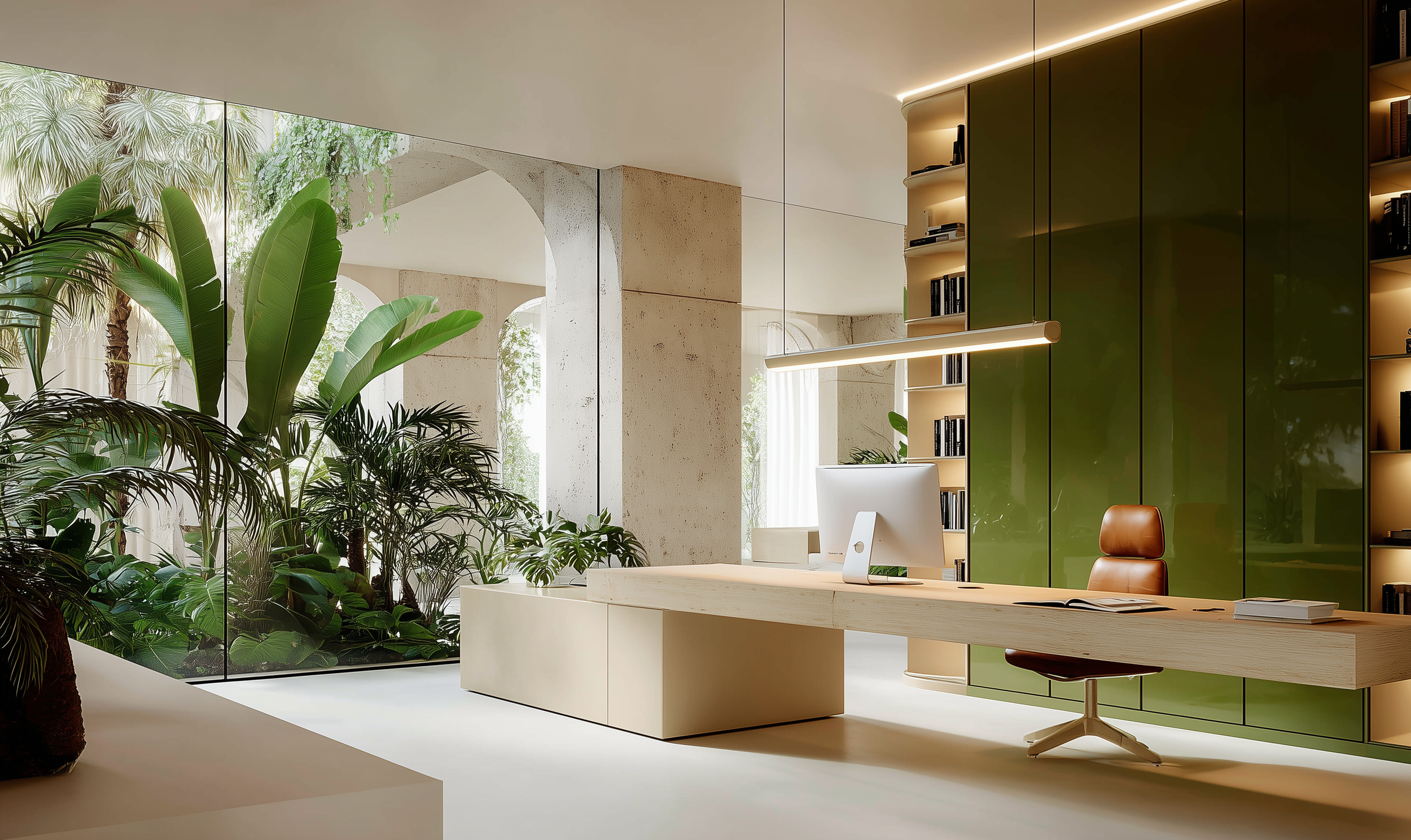
Office design by Flocdesign
Everything else — the palette, the materials, where the bed goes, where the sofa goes — follows from the answer. A room's light is its temperament. You cannot design against it and expect the room to feel calm. You can only design with it.
This is the principle behind good interior design that people often sense but cannot always name: a room with beautiful furniture and poor light will always feel slightly off, while a room with almost nothing in it, bathed in the right light at the right hour, will feel finished. Light-first design is not a stylistic choice. It is the foundation everything else sits on.
Designing a Bedroom Around Light
Nowhere does this matter more than in the bedroom, because the bedroom is the one room in the house directly responsible for two things that natural light governs: how we wake up, and how we fall asleep.
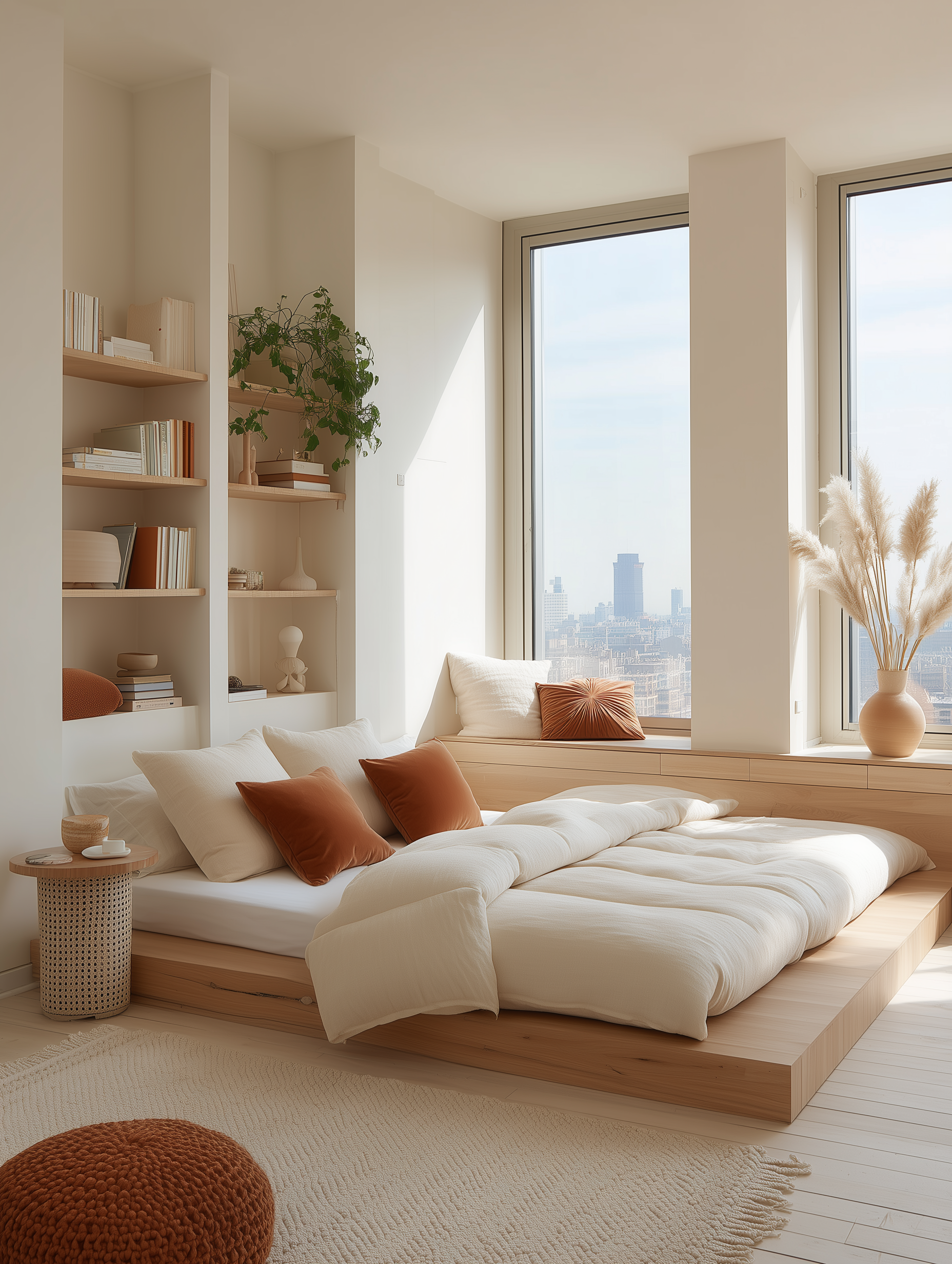
Bedroom light concept by Flocdesign
A well-designed bedroom takes both ends of the day into account, not just the aesthetic of the room at midday when photographs are taken.
Orientation first. Where possible, a bedroom that faces east will catch that early, low, serotonin-triggering light naturally, without the help of any lamp. This is the closest a home can get to recreating my father's kitchen table at seven in the morning — a wash of gentle light that arrives on its own schedule and asks nothing of you.
Window treatments that work with the body's clock, not against it. Blackout curtains have their place for deep sleep, but a room that stays completely dark until you physically get up and open them is a room that fights your circadian rhythm rather than supporting it. Layered treatments — a sheer that filters and softens morning light, paired with a blackout layer you can draw back — give you control over both ends of the day.
Reflective surfaces near the window. Pale walls, a mirror positioned to catch and bounce the morning light deeper into the room, light linen bedding — all of these extend the reach of natural light rather than absorbing it at the point it enters.
Warm, dimmable artificial light for the evening. As natural light fades, the artificial light in a bedroom should fade with it — warmer in tone, lower in intensity, closer to candlelight than to daylight. This supports the second half of the circadian cycle, the wind-down, in the same way that morning light supports the wake-up.
No screens between the eyes and the first light of the day. This is design advice as much as it is behavioral advice: the layout of a bedroom should make it easy to face a window before it makes it easy to face a phone.
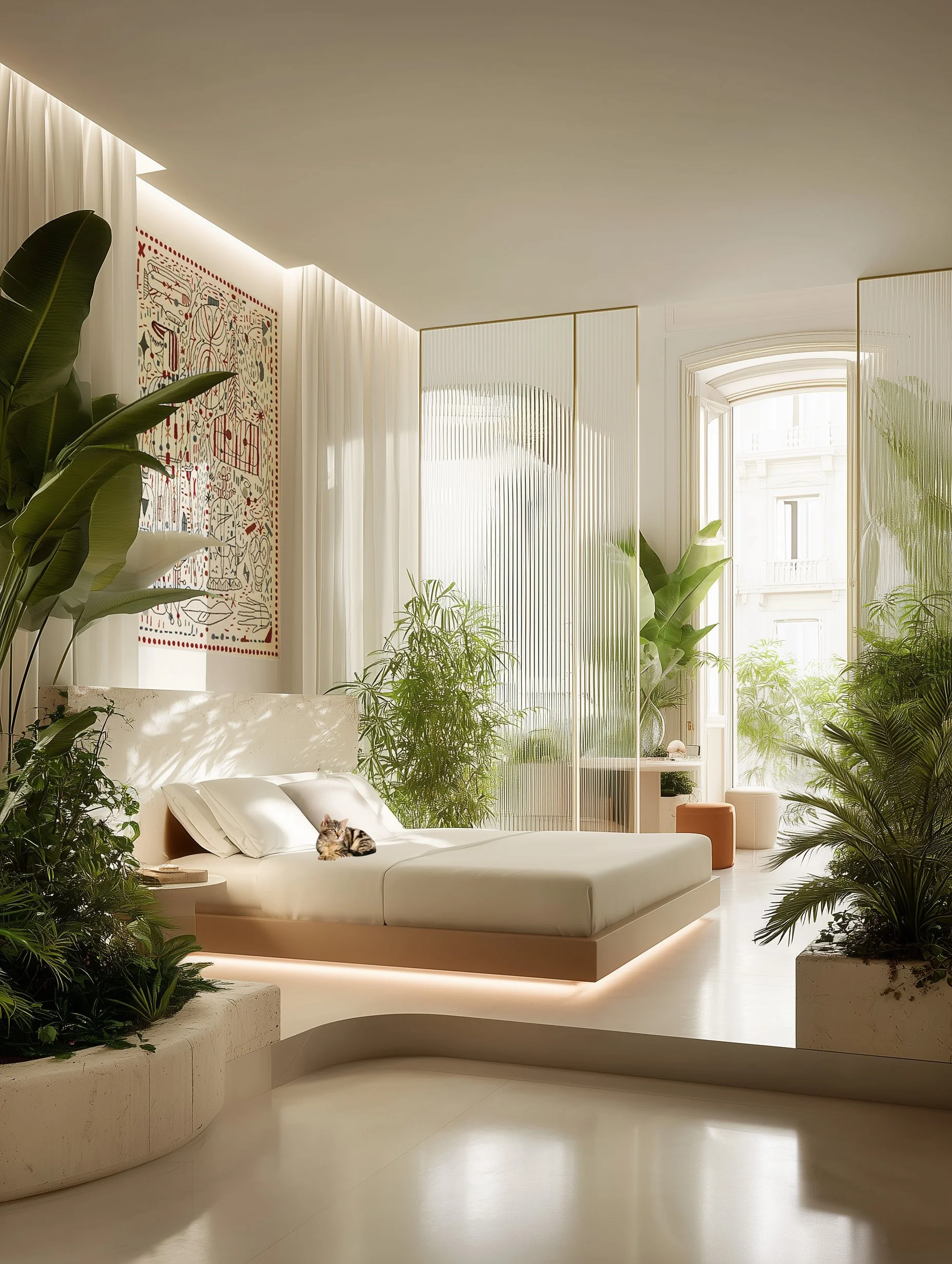
Biophilia in bedroom by Flocdesign
Light Is the First Material, Not the Last
Every other material in a room — the stone, the wood, the plaster, the textile — exists to receive light and to change under it. A slab of travertine looks like nothing in the dark and looks like everything at four in the afternoon with sun raking across its surface. The same is true of linen, of raw oak, of a hand-glazed tile. Materials are, in large part, instructions for how a room should behave in light. Choose them without understanding the light first, and you are choosing blind.
This is why light is the first question, not the last: it is the material that all the other materials are designed to respond to.
I still think about that kitchen table most mornings. Not with nostalgia exactly — more as a working reference, the way an architect might keep a favorite building in mind. The kitchen taught me, long before I had a name for serotonin or circadian rhythm, that a room is not really finished by what you put into it. It is finished by what you let in.
Frequently Asked Questions
Why is natural light considered a design material? Natural light behaves like any physical material in a room: it has texture, direction, and intensity, and it changes throughout the day. Because every surface, color, and texture in a space is designed to respond to light, it functions as a foundational material rather than a decorative afterthought.
Does morning light really affect mood and sleep? Yes. Morning exposure to natural light helps regulate serotonin production and the circadian rhythm, the body's internal clock that governs alertness during the day and the ability to fall asleep at night.
What is the best light for a bedroom? An east-facing bedroom that receives soft, low morning light, paired with layered window treatments (a sheer for daytime softness and a blackout layer for deep sleep) and warm, dimmable evening lighting, best supports the body's natural sleep-wake cycle.
How do I design a room around natural light? Start by observing the room at different times of day before choosing furniture, color, or materials. Note the direction it faces, when direct light enters, and how long it lasts. Let that observation guide window treatments, surface finishes, and layout.